Introduction
Background of Classroom Creativity.
Innovative creativity in classrooms is a requirement in terms of the creation of critical thinking, problem-solving, and innovative skills in students. The friendly learning atmosphere will promote the free flow, variety of solutions and involvement of students.
Attitudes of the teachers, peer relations, and classroom materials are all contributors to creativity. These factors can be comprehended so that educators can develop a more challenging learning environment that can foster talent.
Significance of Psychometric Properties of Classroom Creativity Climate Scale (CCCS)
The climate of creativity measurement will enable teachers to determine the extent to which a classroom is favourable towards encouraging creative thinking. It finds the areas of strength and the challenges which can impede the expression of creativity. The scale of perceptions of the learning environment among students is a reliable instrument provided by standardiseded scale, such as the CCCS. Such knowledge informs the interventions and measures in improving creativity in various learning institutions.
Reasons why the Study should be done in Pakistan.
The education system of Pakistan is highly in the process of developing, and the studies about creativity in the classroom are scarce. The cultural context, pedagogical practices, and access to resources vary in the Western context, and hence it is necessary to localise the research. Psychometric testing of the scales, such as CCS in Pakistan, will assure the validity, reliability, and relevance of the scales by addressing the needs of the locals and facilitating improved educational planning and curriculum development.
Literature Review

Introduction to Creativity Climate in Education.
Classroom creativity climate is the general climate that determines the creative behaviour of students. Some of the factors include teacher encouragement, group work, promotion of originality and access to creative resources. Studies indicate that a high-level of creativity climate in a classroom has a positive effect on engagement, self-efficacy, and problem-solving ability of students. A favourable environment also encourages taking risks and the fear of failure, which are critical in learning innovatively.
Previous Research on CCCS
The Classroom Creativity Climate Scale (CCCS) was created to measure the existence and influence of creative learning environments. Past research has shown that it can be used to measure teacher-to-student interactions, motivation and environmental support of creativity. In other cultural settings, validation can be done so that the tool is reliable in reflecting the specifics of education in various classrooms.
Educational uses of psychometric Assessment.
The use of psychometric tests can be important in assessing intangible education concepts, including creativity, motivation, and interest. These evaluations focus on reliability and validity, ty which guarantee correct and consistent results. The approaches, such as confirmatory factor analysis (CFA), are used to ascertain the validity of the scales through their factor structure, whereasCronbach’sh alpha and composite reliability are used to determine internal consistency.
Methodology
Participants and Sampling Procedure.
The researchers surveyed 350 secondary school students in Pakistan, both in urban and rural areas. Stratified random sampling was used to represent on gender, socioeconomic status, and type of school. Both the public and private schools were used to record a variety of experiences of the participants. The demographic data was gathered to compare possible differences in the perception of classroom creativity climate between different student groups.
Instrumentation: Classroom Creativity Climate Scale (CCCS).
The CCCS is composed of 25 questions that assess four dimensions, namely teacher support, student engagement, peer collaboration, and resource availability. The answers are noted on a five-point Likert scale, with strong disagreement and strong agreement being the opposites of one another. The scale has been administered in other countries, and it has good psychometric qualities, and thus, cross-cultural validationino Pakistan is appropriate.
Data Collection Procedures
The data were gathered within the normal school hours, with the approval of school administrators and informed consent of the parents. The CCCS questionnaire was completed by the students who were supervised by trained researchers. The anonymity was adopted, but the participants were encouraged to speak truthfully as the right perceptions on the classroom setting were to be obtained.
Ethical Considerations
The institutional review board had approved the study ethically. The confidentiality and voluntary participation of the participants were given importance. Putting into account the ethical aspects, such considerations were also to minimise any possible psychological discomfort, to make sure that responses did not influence academic considerations and the choice of dropping out at any point of the study.
Data Analysis

Confirmatory Factor Analysis (CFA) Introduction.
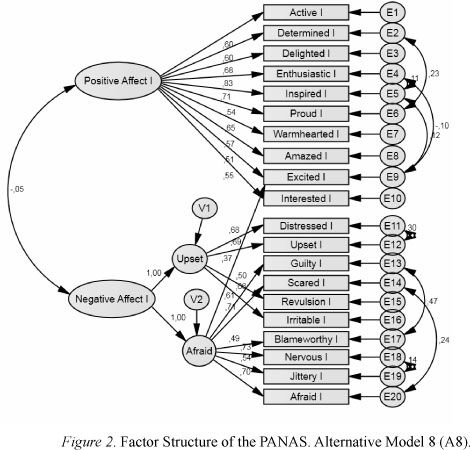
Confirmatory factor analysis (CFA) is a statistical technique that can be used to confirm the factor structure of a scale. CFA tests the hypothesis of the model fitting the observed data. The methodological approach is known as CFA, which was used in the research to determine the reliability of the CCCS dimensions as a measurement of creativity climate in Pakistani classrooms. This approach offers a strong analysis of construct validity.
Model Fit Indices and Criteria.
The assessment of the CFA model was done using several fit indices such as Comparative Fit Index (CFI), Tucker-Lewis Index (TLI), Root Mean Square Error of Approximation (RMSEA), and Standardised Root Mean Square Residual (SRMR). Thresholds, including CFI and TLI greater than 0.90 and RMSEA less than 0.08, are reasonable, show that the model applies to the data to an acceptable degree, and prove the structure of the scale in the local environment.
Reliability and Validity Measures.
Cronbach’s alpha and composite reliability were also used to determine reliability. Construct validity consisted of convergent validity, assessed by average variance extracted (AVE), and discriminant validity, which makes sure that the dimensions are not mixed. These measures testify to the fact that the CCCS is consistent and valid in assessing the classroom creativity climate in Pakistan.
Results
CCCS Factor Structure in Pakistan.
The CFA scores validated the four-item scale to CCCS: teacher support, student engagement, peer collaboration, and resource availability. The items loaded significantly on their individual factors, which implies that the scale is successful in capturing the main dimensions of creativity climate in the Pakistani classrooms. This correlation with assumptions proves the cross-cultural generalizability of the scale.
Reliability Analysis (Cronbach Alpha, Composite Reliability)
The alpha of the four dimensions has a range of 0.78 to 0.89, indicating a high level of internal consistency. The stability of the scale was also confirmed by the fact that the composite reliability was greater than the recommended value of 0.70. These findings demonstrate that the CCCS can be used to give consistent measures in varying classroom environments.
Construct Validity (Discriminant and convergent)
The convergent validity was established because the AVE values were above 0.50 in all the factors. All tests of discriminant validity indicated that inter-factor correlations were less than the square root of AVE values, implying that dimensions are different. These results, in general, confirm the CCCS as an effective instrument for measuring classroom creativity climate.
Discussion
CFA Results Interpretation.
The CFA scores prove that the CCCS can be applied in Pakistan as it is theoretically effective. The high factor loadings depict that every dimension has a significant role to play in explaining the classroom climate of creativity. The findings formulatethea significance of teacher support, student engagement, and resource availability in achieving a creative learning environment.
Comparison and Relation with Past Research.
The findings of the study are consistent with the literature in CCCS, which proves its reliability and validity. The same tendencies have been noted when it concerns research carried out in China, Turkey, and the United States, which means that the dimensionality of the scale can be considered universally applicable, but at the same time, it can be adjusted to the culture. This intercultural reliability enhances the credibility of the CCCS.
Pakistan Implications in Education Practice.
CCCS findings can be used by educators and policymakers to create interventions that can stimulate classroom creativity. A more favourable environment may be developed through focusing on the training of teachers, team learning and having access to creative resources. CCCs’ assessments are also beneficial in schools, as they allow monitoring of the progress and the areas that have to be improved and ultimately lead to improved student learning outcomes.
Constraints and Future Research.
Limitations of the Study
The sample of the study was restricted to students of secondary schools, so it might not be representative of all levels of education. The differences between regions that are connected through culture were not delved into. Moreover, self-reported measures can result in response bias, which can influence the accuracy of the findings.
Future Research Suggestions.
In future studies, bigger and more varied samples by incorporating primary and tertiary education levels must be used. It might be possible to conduct longitudinal studies that monitor the shifts in creativity climate over time. The cross-cultural comparison in Pakistan and other nations can also confirm the applicability of CCCS and identify subtle cultural forces.
Conclusion
Summary of Key Findings
This paper confirmed that the CCCS is valid in the Pakistani classroom, as its factor structure, reliability, and construct validity were validated. Support of teachers, student interaction, peer interaction, and resource availability were found to be important aspects of a supportive creativity climate. The scale offers a feasible instrument oforthe evaluation and enhancement of classroom conditions.
Policy and Practice Implications
The validated CCCS can provide education policymakers, educators, and researchers with a reliable measure that can be used to promote creativity in education. The incorporation of CCCS tests can be used to shape curriculum designs, teacher training and interventions in schools in order to help make the learning process more innovative, engaging and effective among students in Pakistan.
FAQs
1. What is the Classroom Creativity Climate Scale (CCCS)?
The CCCS is a tested instrument employed in assessing the creativity-favourable climate of the classroom, such as teacher assistance, student interest, collaboration among peers and availability of resources.
2. Why do we need to measure classroom creativity?
It assists teachersin determininge strengths and weaknesses in promoting innovation, critical thinking and participation of students.
3. Just how credible is CCCS in Pakistan?
The analysis indicates that the CCCS is highly reliable, with the alpha values of Cronbach ranging between 0.78 and 0.89, which assures reliability in measurement.
4. Confirmatory factor analysis (CFA): What is CFA?
CFA is a statistical method of establishing the structure of a factor of a scale that ensures that items are measuring what they are designed to measure.
5. What is the role played by CCCS in enhancing education in Pakistan?
The findings can help teachers create beneficial classroom settings, refine instructional methods, and become more creative overall.