Introduction Polio Vaccination Scale and Determination of Its Psychometric Properties
Polio is an important health problem affecting the population, even though the world has made significant strides to eliminate it. The best method of preventing polio is through vaccines, but still, beliefs, attitudes, and misconceptions influence acceptance of the vaccine.
It is necessary to measure these attitudes correctly. A good Polio Vaccination Scale is one that will enable the researcher and other policy makers to know the perceptions of the population and how this can be used to enhance the strategies of vaccination.
History of Polio and World Vaccination.
Polio is a viral disease that is very infectious and mostly affects children and may result inlifelonge paralysis. International vaccination efforts by such organizations as the WHO and UNICEF have greatly minimized cases.
Nonetheless, polio has remained in certain areas because of resistance to vaccines, access, and lack of awareness. Knowledge of community attitudes is critical in closing the remaining gaps.
Significance of Attitudes toward Polio Vaccination Measurement.
Availability does not work in the vaccination programs. Uptake is greatly affected by public trust, awareness, and beliefs. The measurement of attitudes assists in determining the fears, lack of knowledge,e and cultural obstacles.
Effective measurement instruments enable the health authorities to craft specific interventions, enhance communication, and confidence in polio vaccines.
Ground of Preparation of a Polio Vaccination Scale.
The core goal of establishing the Polio Vaccination Scale is to offer a scale that is used to measure the attitudes and perceptions related to polio vaccination in a standardized manner.
The scale makes evidence-based decisions, enables comparison across the population, and is useful in determining the effectiveness of the awareness campaigns and policy interventions.
Idea of Polio Vaccination Scale

Definition and Objectives of the Scale.
A Polio Vaccination Scale is a questionnaire that was created to assess beliefs, attitudes, and intentions regarding polio immunization. Its outcomes are to determinethe level of acceptance, factors of hesitancy, and the level of trust of health systems. Strict goals make the scale focused and relevant.
Target Population and Use Conditions.
The scale may be administered to the parents, caregivers, healthcare workers, and community members. It is particularly applicable in areas with low vaccination. It can be used by researchers in surveys, program evaluation, and academic research to collect unified and similar data.
Value in Public Health Research.
Standardized scales are imperative in generating valid results in the field of research in public health. The Polio Vaccination Scale allows the researcher to relate attitudes and real vaccination behavior. Another advantage of it is that it can track the trends over time and assess the effectiveness of interventions to decrease vaccine hesitancy.
Polio Vaccination Scale Development.
Item Generation Process
The first step of the item generation involves the identification of the principal themes (including knowledge, trust, perceived risk, and social influence). The statements are concisely written in simple language to make it clear. All items represent one idea to preclude confusion and enhance the accuracy of the responses.
Literature Review and Existing Scales.
The comprehensive literature review would aid in determining the existing scales of attitudes to vaccination and constructs. Past research provides information on how to word and format items. This move will make sure that the new scale is developed based on known information and not repeat the same weaknesses.
Professional Advice and Content Mapping.
The first items are reviewed by experts in the field of public health, psychology, and immunization. Their comments are used to perfect phrases and make them relevant. The item mapping method of content mapping matches every item to particular domains, which ensures that all significant aspects of polio vaccination attitudes are adequately covered.
Scale Formatting and Response Options.
The scale is presented in a way that it can be easily read and completed. Simple guidelines and a familiar design minimizethe load ofonhe respondents. The use of simple response questions facilitates the participants in providing their responses truthfully and promptly, which enhances the quality of the data.
The Likert-Type Scaling Method.
Scoring technique and Interpretation.
A Likert-type scale, e.g, A five-point agreement scale, may be applied. The answers start with strongly disagree to strongly agree. The scores are added or averaged, and the higher the score,s the more positive the attitude towards polio vaccination. Interpretation guidelines are used to help the user understand the results.
Significance of Psychometric Evaluation.
Psychometric assessment establishes the measure of what is being measured by the scale. Unless the results are evaluated, they can be misleading. Reliability and validity testing give the assurance that the scale is able to generate valid and unchanging data.
General Reliability and General Validity.
The reliability is the element of consistency, whereas the validity is the element of accuracy. They both are both necessary to a useful scale. An invalid scale that is reliable is of no use,e and a scale that is reliable and yet invalid cannot be relied on. It is the balanced assessment that is thus important.
Scoring Reliability of the Scale
Internal Consistency Reliability.
Internal consistency will be used to test the relationship between items in the scale. It demonstrates whether items are measuring the same idea. The scale is cohesive and well-constructed owing to high internal consistency.
Cronbach Alpha Interpretation.
The common measure of internal consistency Cronbach’sach alpha. The values that are above 0.70 are generallyacceptable. The larger the values, the greater the reliability, but very high values can be an indication of redundancy of the items.
Test–Retest Reliability
Test-retest reliability is a time stability measure. The respondents who do the scale do it twice o, often at a short interval. The consistency in scores over time suggests that the scale yields consistent scores.
Consistency of the Scale Across Time.
When the attitudes are not likely to change fast, then stability is important. A stable Polio Vaccination Scale enables the researchers to trace actual attitude changes and notmeasurement errorst.
Scale Scoring Assessment of the Scale.
Content Validity
The content validity will make sure that the scale has all the relevant factors of polio vaccine attitudes. It provides the answer to the question of the inclusion and exclusion of important content as well as irrelevant content.
Expert Review and Content validity Index (CVI)
Specialists would judge every item based on its relevance and clarity. These ratings are condensed by the Content Validity Index. A large CVI value means that there is high consistency in the perception of the experts regarding the quality of items.
Construct Validity
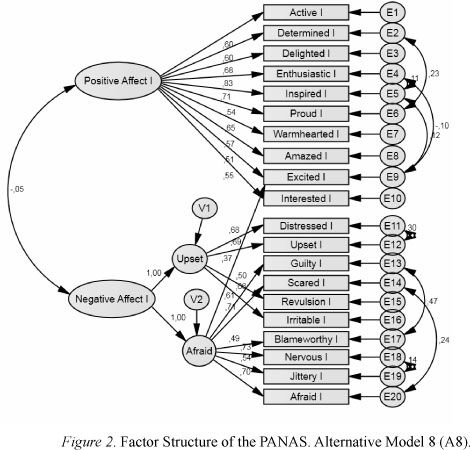
The construct validity is used to review whether the scale is a representation of theoretical concepts with respect to attitudes towards vaccination. It is commonly tested in the form of factor analysis.
Exploratory Factor Analysis (EFA)
EFA does not presuppose any fixed model, but finds the underlying structure of factors. It assists in deciding on how items cluster together, and domains are independent though connected.
Confirmatory Factor Analysis (CFA)
CFA teststhe hypothesis that the proposed factor structure is a good fit to the data. The theoretical structure of the scale is justified by good fits of the model and enhances construct validity.
Criterion-Related Validity
Criterion-related validity is the measurement of the relationship between the scale and extraneous criteria, such as actual vaccination or vaccine intention.
Concurrent and Predictive validity.
Concurrent validity analyses the associations with present behavior, whereas predictive validity evaluates future results. The two of them have evidence that the scale has practical value.
Data Collection and Sample Characteristics
Sampling Technique and Sample Size.
Representativeness is obtained with the help of proper sampling methods. Mainly sufficient sample size is essential to good factor analysis and statistical power.
Demographic Characteristics of the participants.
Gathering demographic information can be used to explain the results and find subgroup distinctions. The attitudes towards vaccination are usually affected by such factors as age, education, and location.
Ethical Considerations
Informed consent, ethical approval, and confidentiality must be obtained. The appreciation of the rights of the participants generates trust and adherence to the research standards.
Statistical Analytical Process.
Data Screening and Assumptions.
Data screening involves the examination of values that are missing, outliers, and normality. Satisfaction of statistical assumptions enhances the quality of the results of the analysis.
Factor Extraction and Model Fit Indices.
Factor extraction procedures and fit indices are used to make decisions regarding scale structure. A good fit helps in establishing the validity of the scale-drawn conclusions.
Software Used for Analysis
Statistical package SPSS or AMOS is usually employed. These instruments assist in making intricate analyses and ensure transparency and reproducibility.
Polio Vaccination Scale and Determination of Its Psychometric Properties Results and Findings
Reliability Results
Internal consistency reliability is normally acceptable to high, with test-retest reliability being strong. This fact shows the scale is reliable.
Scale Structure of Factor Structure.
Findings tend to show explicit factor patterns within theoretical realms. This justifies the concept design of the scale.
Validity Evidence Summary
The combined evidence of validity shows that the scale is properly used to measure attitudes to polio vaccination and is meaningfully connected to the outcomes.
Discussion
Psychometric Findings Interpretation.
Results indicate that the Polio Vaccination Scale is valid and reliable. It has good psychometric properties to be used in research and practice.
Comparison With the Past Research.
The scale can be better clarified, more culturally relevant, or more comprehensive in the areas of attitudes as compared to the previous instruments.
Advantages of Polio Vaccination Scale.
The main advantages of it are simplicity, high reliability, and extensive validity testing. The features improve usability and credibility.
Practical Implications
Application of the Scale in Health Programs.
The scale can be used by the public health programs to determine the readiness of the community and to design interventions based on it.
Applications of Policy and Awareness Campaign.
The findings of the scale can assist policymakers in developing evidence-based awareness campaigns and can be used to distribute resources efficiently.
Role in Research on vaccine hesitancy.
The scale provides quality data to the study of vaccine hesitancy that will assist in finding and managing the cause of resistance.
Limitations of the Study
Sample-Related Limitations
Poor geographic/demographic diversity can also impact generalizability. Further research needs a larger sample.
Methodological Constraints
The self-report and cross-sectional design might reduce the causal interpretations. These limitations are to be recognized.
Future Research Recommendations.
Scale Refining and Cross-Culture validation.
The future studies should elaborate on items and test the scale on different cultures in order to make it more universal.
Longitudinal Studies and Greater Applications.
Longitudinal studies will be able to determine the change in attitude with time and associate it with the vaccination outcomes.
Conclusion
Summary of Key Findings
Polio Vaccination Scale is a good evaluator of attitudes towards vaccination; it has high reliability and validity.
Participation in Polio Eradication Worries.
The scale contributes to more efficient vaccination practices and eradication objectives since it enhances the knowledge of societal views.
The Scale: Concluding Remarks on Utility.
On the whole, the scale proposes a useful, evidence-based methodology that can be used by researchers and practitioners to eradicate polio in every part of the world.
FAQs
1. What isthe Polio Vaccination Scale?
It is a survey, which is aimed at testing attitudes and convictions regarding polio vaccination.
2. What are the important psychometric properties?
They ascertain the accuracy, dependability, and validity of the scale.
3. Who can use this scale?
It can be used by researchers, public health professionals,s and policymakers.
4. What is the type of scaling that is usually employed?
A Likert-type scale is most universally used.
5. What is the contribution of this scale to the programs of vaccination?
It recognizes the barriers to attitudes and assists in specific interventions to enhance the vaccine uptake.