What is exploratory factor analysis (EFA)?
Definition and Core Purpose
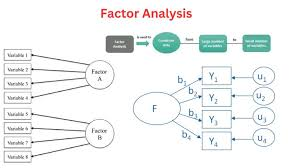
Exploratory Factor Analysis is a statistical technique applied to identify the latent patterns of massive data sets. It assists the researchers in categorizing similar variables into significant factors.
The primary aim of the EFA is to condense complicated information, minimize data, and unearth the underlying structures that are impossible to see directly.
Why Researchers Use EFA
EFA is applied by researchers to gain insight into the relationship between various survey items or test questions. It eliminates confusion because similar variables are grouped into factors.
It is useful in enhancing measuring instruments, developing more powerful research models, and giving more definitive responses to psychological, academic, and business research.
Exploratory Factor Analysis: When to use it
Appropriate Research Situations.
EFA is applied when the researcher is not aware of the exact structure of his or her data. It is best used in preliminary stages of research, scale construction, or when a new questionnaire is being tested.
It is also applied in developing theories, determining patterns, or examining connections between several variables that are observed.
Assumptions
There are conditions that should be satisfied before EFA can be run. The data needed should be large where the variables are moderately related. Such tests as the KMO and Bartlett test check data is appropriate.
Variables are expected to be normally distributed, linear, and contain no extreme values to give accurate and reliable factor extraction.
Key Steps in Conducting EFA
Preparation and screening of data
EFA requires proper data preparation before it can be run. Researchers verify missing values, eliminate the responses that are unusual, and check the correlations between items.
They also make sure that the sample size is sufficient. Clean data assists in creating clearer factor structures and enhances the trustworthiness of the results of the analysis.
Selection of the Appropriate Extraction Method
The appropriate extraction method can be selected to ensure the meaningful factors. The methods are usually chosen by the researchers according to the purpose of the study, the type of data, and the anticipated structure of factors.
The extraction is useful for uncovering significant hidden patterns and eliminating unnecessary noise that can be misleading in interpretations.
Factor Rotation Techniques
Rotation techniques aid factors to become clearer and easier to read. They rearrange the factor matrix such related items cluster together.
Rotation is not the process that alters the data but enhances knowledge. It assists the researchers in determining what items to include in a particular set, and it also gives a better interpretation of the factors.
Factor Loadings: Interpretation
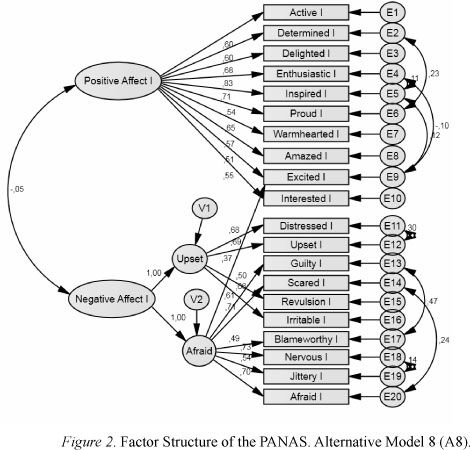
Factor loadings indicate the degree of association of each variable with a factor. High loadings mean that there is a strong relationship, whereas low loadings mean that there are weak links.
The process of interpretation of loadings also aids researchers in making decisions about what to retain, drop, or alter, leading to a sparse and interpretive factor structure.
Extraction Methods in EFA
Principal Component Analysis (PCA)
Reducing the complexity of data is carried out by the Principal Component Analysis, which is widely used as the extraction technique. It converts variables to new components that capture the maximum possible variance.
PCA is primarily employed in cases where the researcher is interested in rapid data reduction and has groups of data that are clearly defined without addressing the underlying theory.
Principal Axis Factoring (PAF)
Principal Axis Factoring is concerned with commonality between the variables. It seeks to find out the latent factors affecting responses.
PAF is chosen in the case when the aim is to investigate a more profound psychological construct or theoretical models. It is good when there is no normal data around, and it provides better factor illumination.
The Maximum Likelihood Extraction (MLE)
Maximum Likelihood Extraction applies in cases where it is assumed that researchers have normal data. It contains statistical tests that verify the fit and quality of models of factors.
This approach is useful in complex studies in which the comparison of the models, testing of their significance, and more robust statistical inferences need to be done.
Factor Rotation Approaches
Orthogonal rotation methods
Orthogonal rotation is used to maintain factors independent and uncorrelated. Varimax methods are used in making simple and clear factor patterns.
This method is applicable when researchers think that there are no factors that interact. It simplifies the interpretation process and enhances the clarity of numerous studies in the psychological and educational fields.
Oblique Rotation Methods
The factors can be correlated with oblique rotation. Those methods as Promax and Oblimin, are applied when variables are by their nature connected.
The technique gives a realistic perspective of complicated human actions. It is widely applied in social sciences, in which constructs tend to overlap.
The assessment of the Factor Structure

Eigenvalues and Scree Plot
The eigenvalues are used in determining the number of factors to retain. Stronger factors are represented in higher eigenvalues.
Scree visualization is used to visualize the strength of factors and determine the best point at which to cut off. The combination of them helps researchers to choose the factors that are meaningful, and to avoid irrelevant or insignificant aspects.
Checking Model Fit and Reliability.
The model fit tests indicate the level of fit between the data and the factor solution. Checks on reliability, e.g., alpha of Cronbach, are used to quantify consistency among items.
These tests make sure that the end factor structure is consistent, credible, and applicable in future studies or in future scale construction.
Common Challenges in EFA
Over-Factoring vs. Under-Factoring
Over-factoring is a phenomenon that results in more factors being extracted than is necessary, and as a result, the structure becomes confusing.
Under-factoring occurs when the number of factors selected is too small to show the significant trends. It is up to the researchers to strike the right balance between statistical tests and theoretical knowledge in order to obtain the right results in the factors.
Interpretation issues and Cross-Loadings.
Cross-loadings occur when an item gets loaded on more than one factor, and it is confusing. This complicates interpretation and undermines the levels of clarity of the factor model.
Researchers deal with cross-loadings through elimination of ambiguities, question reformulation, or changing rotation techniques to achieve improved outcomes.
Real-Life Applications of EFA

Application in Psychology and Social Sciences
EFA is popular in constructing psychological scales, analyzing personality traits, and studying patterns of behavior.
It aids the researcher to know how perceptions, attitudes, and emotions cluster together. EFA is used to build theory and enhance the accuracy of measurement in social sciences.
Marketing and Business Research Use
EFA is used in marketing to determine the consumer tastes, purchasing habits, and brand awareness.
It is used by businesses to cluster the customer responses, enhance survey tools, and develop effective strategies. EFA helps to understand the market better and make decisions using data.
Conclusion
Significance of EFA in Contemporary Research.
Exploratory Factor Analysis continues to be an influential instrument of detecting connections between complicated data. The fact that it can be used to reveal patterns that are not easily seen facilitates valuable research growth.
Through making structures more specific, EFA enhances the measurement instruments, reinforces theories, and improves the overall quality of research in most areas.
FAQS
1. Is EFA different from Confirmatory Factor Analysis?
Yes, EFA will be testing unstructured structures, and CFA will be testing models.
2. What is the number of participants required in EFA?
One of the general ones is 200 or 10 participants or respondents per item.
3. What tests check EFA suitability?
KMO and Bartlett’s test confirm data readiness for factor analysis.
4. Can categorical data be used in EFA?
It is recommended to use continuous data, but polychoric correlations can help.
5. What is considered a good factor loading?
Loadings above 0.40 are generally acceptable for interpretation.