The importance of Data Analysis Skills to Students.
Data analysis is now a much-needed skill that is not confined to mathematics or statistics courses. I have observed learners across academic fields develop analytical thinking that enhances their insights into subjects and disciplines such as literature and environmental sciences. Gathering, storing, processing, and drawing conclusions from information equip students for almost any profession they may pursue.
Analytical skills are consistently among the top needs employers require, but many students graduate without experience applying these abilities to real-world issues. The positive news is that the student’s data analysis examples can be found across sports statistics, spatial trends, consumer behaviour, and numerous other areas that align with the student’s interests and life experiences.
Concrete examples of learning can demonstrate that abstract concepts are fundamental and concrete, and explain why these skills are essential even after receiving good grades. Students who acquire analytical skills early demonstrate confidence in addressing complex problems by breaking them down into manageable parts. This attitude will be helpful in both school and work life.
Simple Survey Analysis with Beginners.
Surveys, both conducting and analysing, in their school or community, are among the most readily available examples of data analysis for students. I have been leading students in projects that investigate everything from cafeteria food preferences to the effectiveness of study habits. The experience will focus on essential skills: formulating concrete research questions, designing an impartial survey instrument, collecting data systematically, and analysing the findings appropriately.
A group of teenagers with whom I was engaged surveyed students about their sleep habits and academic performance and received responses from more than 200 peers. They entered data into spreadsheets, computed the mean hours of sleep by grade level, and created charts of the correlation between sleep duration and self-reported grades. They found that students with an average of seven to eight hours of sleep had higher grades than those who slept significantly less or more.
This case illustrates correlation and raises questions of causation, such as whether sleep helps students achieve better grades or whether students who achieve better grades are better able to organise their time. Survey projects also teach students that the data collection process must be carefully planned, and that interpretation requires critical thinking beyond merely determining averages.
Sports Statistics Analysis

Performance Measures in basketball.
Sports are interesting research areas for data analysis, as they attract most youth and offer rich datasets. There is much more to basketball statistics than the number of points scored; they also include assists, rebounds, shooting percentages, turnovers, and efficiency ratings that reflect a player’s effectiveness. Collaborated with middle school students who were evaluating the statistics of a school basketball team to identify strengths and areas for improvement.
They computed each player’s field-goal percentage, assessed the impact of home and away games, and monitored scoring tendencies by quarter to determine at which stage the team played its best. A single student found that the percentage of three-pointers made by their team in the fourth quarter of their games was attributable either to fatigue or to defensive strategy.
The opponent’s defensive strategy prompted a discussion with coaches about conditioning and late-game strategy. Publicly available professional sports data can provide students with information on professional sports, enabling them to compare across studies the impact of rule changes and to assess whether a particular rule is correct and the champion associated with it. These successes will include data cleaning, calculating percentages, identifying trends, and the significance of context in interpreting numerical data.
Patterns and Analytics of Soccer.
Soccer offers more opportunities for analysis than basketball, whose play is continuous and involves fewer statistical events that require multiple approaches to measurement. Professional leagues provide match statistics that help students analyse possession percentages, pass accuracy, and territorial control. I was a mentor on a study investigating the correlation between possession and match outcomes, and I predicted that the teams involved controlled the ball more often.
Their analysis provided a more nuanced picture: sixty percent is a per cent wash, whereas fifty to fifty-five percent possess per cent possession washes a win by quite a bit more, with a larger margin to sixty percent. This pivotal realisation led to the study of alternative tactical strategies and to the recognition that the strength of correlation is essential only in its direction.
Students also examined differences in home-field advantage by league and whether weather conditions influence scoring rates. These examples teach us that data usually surprises and that one can learn some interesting things when findings do not match expectations. The sports analysis presents the students with statistics and percentages, visualisations, and the process of conveying the findings to interested audiences.
TD Scientific Data Projects.
Weather Pattern Analysis
A good example of data for student analysis is climate and weather data, as the information is publicly available, locally relevant, and relates to significant global problems. Students can access weather data for their area to compare changes in temperature, precipitation patterns, and extreme weather events over decades. I supervised students who studied whether the average temperatures in their city changed over the last fifty years.
The project involved downloading data, handling missing values, computing decade averages, and drawing line graphs to identify trends. They verified that the warming was approximately 1.8 degrees Fahrenheit, with most of the warming occurring since 1990. This raised the issue of measurement consistency and the separation of local patterns and global climate change.
Students may examine seasonal change, the weather in different cities, or study whether folklore forecasts,s such as” red sky at mornin, “g are statistically valid. The projects cover the basics of time series analysis, including moving averages to smooth short-term variations and the distinction between weather variability and climate trends, which most adults struggle with.
Water Quality Monitoring
Meaningful data analysis would enable environmental science students to monitor the water quality of their local area through chemical analyses of organisms. I collaborated with students who measured pH, dissolved oxygen, nitrate levels, and turbidity in a local stream during a monitoring session. They took measurements systematically, considered parameters with seasonal components, and used the analysed data to assess their ecosystems.
Their data indicated that dissolved oxygen decreased in the summer months, which is normal because warmer water has lower oxygen. Nevertheless, high nitrate concentrations in rain anare found d the stream. Entering the project has taught the importance of measurement accuracy, the need for a uniform methodology, the ability to identify seasonal patterns, and the interactions among multiple variables in complex systems.
Students shared the findings with local environmental organisations and demonstrated how data analysis could be helpful in practice, not only in the course of study. Other similar projects may examine air quality, soil composition, or biodiversity across various habitats, all of which will provide practical experience in scientific data collection and analysis.
Technology and Social Media Analysis.
Screen Time Tracking Research.
Patterns of use of technology provide data analysis relatable examples to students since they directly relate to their lives. Students can monitor their personal device screen time over a few weeks, with screen time broken down by application type: social media, gaming, educational content, and communication. I had students who were mentoring students who were exporting their phone’s screen time data, tabulating it in spreadsheets, and calculating the average across all categories and days of the week.
Their review showed that the highest use of social media occurred on weekend evenings, whereas the highest use of educational apps occurred on weekday afternoons and evenings. Students also frequently found themselves caught off guard by the size of their actual consumption relative to their expectations, indicating that data can provide objective evidence that challenges perceptions. Data categorisation, time-series analysis, and the development of compelling visualisations to convey patterns are among the lessons learnt in this project.
The extensions might analyse associations between screen time and sleep quality, mood ratings, or productivity indicators. The individual connection ensures that students are genuinely interested in discoveries, and even the slightly awkward fact about usage rates is recognised as an effective behaviour-altering factor compared with lectures delivered by parents.
Patterns of Social Media Engagement.
Students registered on social media platforms can study engagement trends on their own accounts or on those of famous personalities they follow. One of the groups I collaborated with examined which types of posts generated the most activity on their official school accounts, including photos, videos, polls, and text posts. They collected the number of likes, comments, and shares for two months of posts, divided the content into categories, and calculated the average engagement.
Their results indicated that video content elicited three times as much interaction as static images and further suggested that posts made between 3 PM and 5 PM elicited significantly more interaction than those made during school hours. Such lessons assisted the student council in maximising their communication strategy. This example illustrates how to collect data online, classify it, compute averages, and identify optimal timing trends.
Students might take this further by analyzing feelings in remarks, semiotic content, hashtag performance, or contrasting interaction rates across platforms. Rates across sectors demonstrate how organisations and businesses use data analysis to inform strategic decisions and connect classroom skills to professional practice that students will pursue in their future careers.
Analysis of Academic Performance.
Students can use the power of analysis to learn about and evaluate their learning, and to examine the methods of study, time spent, and patterns in their results. I have observed students who record the hours spent on various subjects, approaches, and techniques they used, and then compare these with the results of quizzes and tests. One of the students was thorough in noting whether she studied alone or in groups, whether she used practice problems or reread notes, and whether she studied in a single long session or in shorter sessions.
The results of her semester-long analysis showed that distributed practice with problems was more effective than marathon study sessions with passive reading, and research in the learning sciences has substantiated this conclusion. The experiment taught her the principles of experimental design, the necessity of controlling variables, and how to draw action-oriented conclusions from personal data.
Students might be able to examine the correlation between the rate of homework completion and their test performance, identify the types of questions they consistently answer incorrectly, or follow up on how factors such as sleep, exercise, and nutrition may affect academic performance. These projects bring abstract statistical ideas to life and imbue them with personal significance, and may also enhance study habits by providing evidence-based guidance rather than general guidance.
Consumer and Economic Analysis.
Permissible and Non-Permissible Spending.
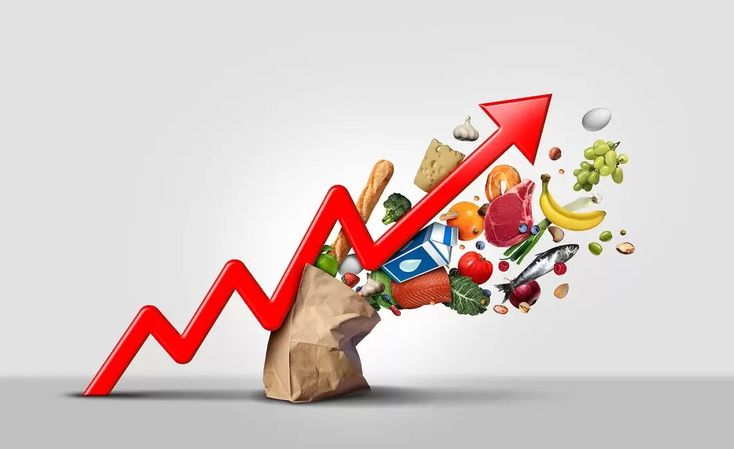
The practical data analysis examples offered in personal finance courses teach students both analytical skills and financial literacy. Students will be able to monitor their monthly spending, including food, entertainment, clothing, and savings. I collaborated with middle school students who evaluated school students’ end-of-year patterns, disaggregated allocation percentages by category, and recommended allocations.
Some students found that they were spending much more on snacks and drinks than they had realised onminopurchasess each day. By drawing pie charts illustrating their expenditure distribution patterns, the patterns became readily apparent at a glance, whereas they were not discernible from raw numbers.
Students may extend it to a comparison of their spending patterns with those of their peers, a comparison of whether days of the week show different spending levels, or a comparison of the effects of special events on their spending. Such ventures develop proficiency in percentage, budgeting, data classification, and visualisation when developing an understanding of individual financial behaviour. This is one of the most practically functional analytical exercises that students can undertake in the course of their education, as these skills are directly transferable to adult financial management.
Frequently Asked Questions
What are the tools required in data analysis projects by students?
Most student projects are well-managed using basic spreadsheet software, such as Microsoft Excel or GooglShSheets. Survey tools such as Google Forms are free and easy to use, similar to a to-do list or a calculator.
What amount and type is user-friendly for students?
To learn, 30-100 data points are generally sufficient to demonstrate patterns and apply analytical methods. Big data provides more accurate results, but it is not necessary to build the basics.
Do younger students have the capacity to do data analysis projects?
Ye — elementary students can gather and plot simple statistics, such as class pet preferences or daily temperatures. The level of complexity must be developmental, although analytical reasoning begins early.
What should be the duration of the analysis of student data?
Simple projects may require one week of work, including data gathering, whereas semester-long projects with extensive data collection and analysis may offer more profound learning opportunities and advanced skills.
What is the best skill students will have learned in such examples?
Thinking critically on what constitutes and does not constitute data: learning how to operate within limits, how to be skeptical, and how to make the right instead of excessive inferences based on the evidence they have collected and processed.