Introduction
Two vital pillars of contemporary education are learning strategies and data analysis. When integrated, they assist students to learn more and teachers to teach more effectively.
Learning strategies are concerned with the way the students comprehend and retain information, and data analysis is concerned with the results of the learning. The combination of them generates a powerful system that promotes academic growth, skill development, and sound decision-making in education.
Learning Strategies: definition.
Learning strategies are designed approaches through which learners perceive, interpret, and remember the information. The methods involve taking notes, summarizing, questioning, and learning on the basis of practice.
They assist students in being more active in learning. With the help of the appropriate learning strategies, it is possible to enhance concentration, boost memorizing capacity, and understand intricate issues better.
Data Analysis Role In Contemporary Learning.
Data analysis has a major role to play in contemporary learning as it transforms learning data into knowledge. Individual schools and institutions receive data on tests and assignments, attendance, and online platforms.
Interpretation of this data
The interpretation of this data enables a teacher to understand how students perform, where they excel, and where they struggle, and make adjustments to their teaching approach. Evidence-based learning is guaranteed through data-driven learning since it is not an act of guessing.
Learning Strategies Knowledge
There is no universal strategy of learning. Various students do not study the same way, and that is why it is significant to learn more about different kinds of learning strategies in order to study effectively.
Cognitive Learning Strategies
Cognitive learning strategies revolve around the mental process of learning. These are repetition, organization, and elaboration. As an illustration, mind mapping or chapter summarizing can assist the learners in relating new knowledge to what they already know. These plans enhance understanding and assist the students in retaining information in the long-term memory.
Metacognition Learning Strategies.
Metacognitive strategies refer to the thinking of the learning process. Learners organize their study, track their learning, and assestheirhe progress. Methods such as self-questioning and reflection make learners realize what they are best at. This awareness will result in increased control of learning and increased academic confidence.
Behavioural Learning Strategies.
Behavioral learning strategies are concerned with actions and habits thataid learning. These are time management, goal setting, and practice. Reward motivation and routine programs are also in this category. This kind of strategy keeps the students disciplined, involved, and focused on the goals of learning.
Learning Strategies in Education.
Learning strategies are applied in educational systems to address the needs of different learners and enhance their results.
Active Learning Techniques
Active learning helps the students engage in the process of learning. Discussions, problem-solving assignments, and case studies are the activities that encourage critical thinking. Students will be active listeners, which makes it easier to understand and retain information in the long term.
Group Learning Strategies.
Group work and peer interaction are components of collaborative learning. Students get to learn through one another, sharing ideas, arguing out concepts, and solving problems collectively. This method improves the level of communication, collaboration,n and social learning and promotes the acquisition of more knowledge on the topics.
Student Directed Learning techniques.
Self-directed learning enables the students to be responsible for their learning. The learners specify their targets, select materials, and monitor their achievement. This approach instills lifelong learning and makes students ready to face real life, where they must think independently.
Significance of Data Analysis in Education.
Data analysis enables educators and learners to know the effectiveness of the learning strategies and the overall performance of the education.
Student Performance Measurement.
With the assistance of data analysis, test scores, assessments, and participation records can be used to measure the performance of students accurately. This assists in the determination of academic development and weaknesses. Showing results in clear performance data enables teachers to give specific assistance where necessary.
Determination of Learning Patterns.
The learning patterns and trends are identified through the analysis of the educational data. As an illustration, the teachers are able to determine what areas students have difficulties in or which instructional strategies yield more effective outcomes. Such understandings are used to make instruction more effective.
Enhancing Academic Performance.
Academic outcomes are better when supported by data analysis that assists in learning strategies. The personalized teaching, the timely intervention, and the constant development of the teaching practice are the results of data-driven decisions.
Basic Ideas of Educational Data Analysis.
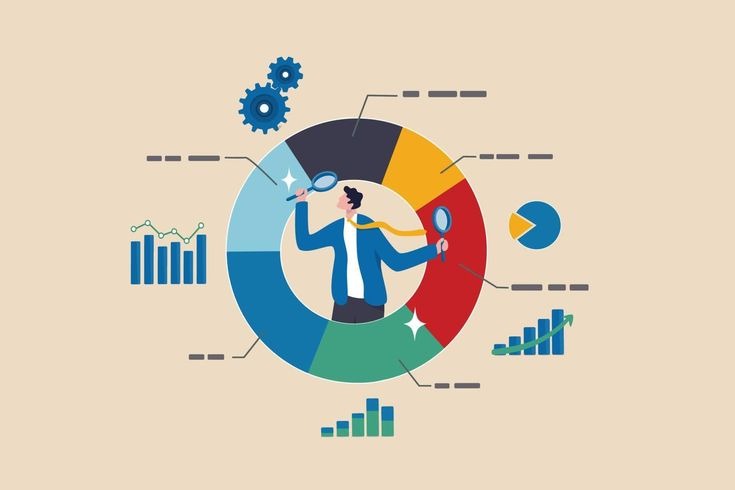
To apply it to the sphere of education, it is crucial to know the fundamentals of data analysis.
Learning Quantitative Data.
Quantitative data are those based on numbers like grades, test scores, and attendance rates. It is simple to measure and compare this data. It aids in monitoring progress and performance as well as recognizing trends in the long run.
Qualitative Educational Data.
Qualitative data dwells on descriptive data like feedbacks of students, observations, and interviews. It offers more information about the experiences, motivation,n and engagement of the learners. This kind of data supplements quantitative findings.
Data Interpretation Basics
Data interpretation entails the analysis of results and coming to significant conclusions. Teachers need to be aware of the context, not biased, and utilize information wisely. Correct interpretation would mean that data would be used to make correct educational decisions, and they would be fair.
Aids andMethodss of Learning Data Analysis.
Contemporary learning employs the use of multiple instruments to gather and evaluate learning information effectively.
Statistical Analysis Tools
Statistical software aids in the analysis of large volumes of educational data. These tools recognize correlations, trends, and performance gaps. They promote evidence-based planning and evaluation within the schools.
Analytics of the Learning Management System.
Learning Management Systems (LMS) offer built-in analytics that monitor student activity, engagement, and advancement. The teachers will be able to track both participation and completion of assignments and learning behavior in real time.
Analyzing Educational Data visually.
Complex data can be simplified using data visualization tools like graphs and charts. Pictorial representations can enable teachers to detect patterns fast and explain information effectively.
Part of Learning Analytics in Strategy Development.
Learning analytics bridges the gap between the learning strategy and data analysis.
Learner-centred Learning Journeys.
Learning analytics facilitates individualized learning through customization of the content to the needs of students. According to the performance data, the learners are provided with specialized resources, depending on their level of skills and speed.
Adaptive Learning Systems
Adaptive learning systems are automated systems that make changes to instruction based on data. These systems react to the action of the learner and provide extra support orhigher-levelr learning material accordingly.
Predictive analytics in Education.
Predictive analytics involves the use of past data to predict future performance. Teachers will be able to detect the at-risk students in good time and implement timely interventions to enhance the rates of success.
Adopting Data to enhance Teaching Strategies.
Data analysis assists educators with the process of streamlining their teaching techniques.
Evidence-Based Design of Instruction.
Data-driven instructional design facilitates the delivery of lessons that address learner needs. The evidence provided by the performance of students can help teachers alter content, pacing, and practices.
Learner Progress: Monitoring.
Constant data tracking assists in monitoring the progress of the learners. This will enable teachers to evaluate the effectiveness of instructional methods and make amends where necessary.
Continuous Improvement and Feedback.
Continuous improvement is supported by data-based feedback. The students are well guided, and the teachers improve their strategies to make learning effective.
Difficulty in Strategies of Learning and Data Analysis.
Although it is advantageous, learning strategies should be integrated with data analysis, and this is a challenge.
Accuracy and Reliability of Data.
Wrong or incomplete information may resultino poor decision-making. To attain quality data, it is crucial to provide a reliable analysis and fair evaluation.
Ethical Concerns and Privacy.
The information in education should be taken care of. In data-driven education, the privacy of students is paramount, and making ethical decisions is important.
Proficiency Discrepancies in Data Interpretation.
Not all educators are trained in data analysis. The absence of skills may hinder the effective utilization of learning data, and the idea of professional development is necessary.
Benefits of Combining Learning Strategies with Data Analysis
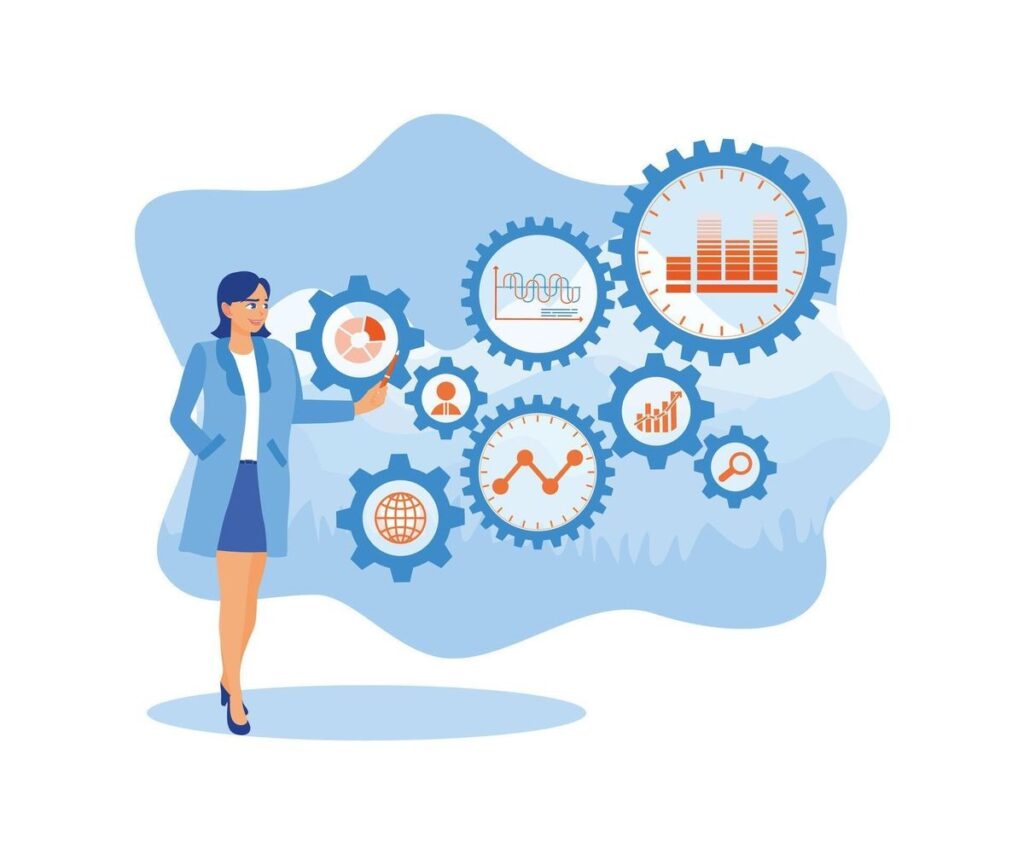
The integration of learning strategies and data analysis offers significant advantages.
Enhanced Learner Engagement
Data-informed strategies create engaging learning experiences tailored to student needs, increasing motivation and participation.
Better Decision-Making in Education
Educators make informed decisions using reliable data, improving teaching quality and learning outcomes.
Improved Learning Efficiency
Targeted strategies reduce wasted effort and focus on what works best, leading to efficient and effective learning.
Real-World Applications of Learning Strategies and Data Analysis
These concepts are widely used across different learning environments.
Use in Schools and Universities
Educational institutions use data analysis to improve curriculum design, teaching quality, and student success.
Corporate Training and Professional Development
Organizations use learning data to design effective training programs and measure employee skill development.
Online and E-Learning Platforms
E-learning platforms rely on analytics to personalize courses, track progress, and improve user experience.
Future Trends in Learning Strategies and Educational Data Analysis
The future of education is increasingly data-driven and technology-supported.
Artificial Intelligence in Learning Analytics
AI enhances learning analytics by providing deeper insights, automation, and personalized recommendations.
Big Data in Education
Big data enables large-scale analysis of educational trends, supporting system-wide improvements and innovation.
Personalized and Smart Learning Environments
Smart learning environments combine technology, data, and strategy to create adaptive, learner-centered education systems.
FAQs
1. What are learning strategies in education?
Learning strategies are methods students use to understand, process, and retain information effectively.
2. Why is data analysis important in learning?
Data analysis helps measure performance, identify patterns, and improve teaching and learning outcomes.
3. How do learning analytics support personalized learning?
Learning analytics uses data to customize content and pace based on individual learner needs.
4. What challenges exist in educational data analysis?
Common challenges include data accuracy, privacy concerns, and a lack of data interpretation skills.
5. How will learning strategies evolve in the future?
Future strategies will focus on AI-driven personalization, smart learning systems, and data-informed decision-making.