Services for Statistical Analysis Understanding
What These Services Cover
Professional statistical services revolve around the processing of raw data, the identification of trends, and the transformation of information into direct outcomes.
Experts employ proven methods to check quality, minimize errors, and present findings in simple terms. Such services assist individuals, businesses, and researchers in making viable decisions using trusted clean data.
The reasons why people use these services.
Several organizations do not have the time or sophisticated tools to handle complex data in the right way. Workflows and reliable outcomes are provided by professional analysts, making the process easier. With the experience, all the data sets are processed with precision and understandability, enhancing the quality of the decisions and research findings.
Significance of data evaluation accuracy.

Why Accuracy Matters
Correct data will mean that conclusions, reports, and decisions are credible. The slightest mistake can lead to the wrong direction of a project.
Professional evaluators revise all the details, eliminate discrepancies, and present results that are applicable in reality. This precision breeds trust and saves money in the various disciplines.
The Accuracy of Data and its impact on the outcomes.
Properly assessed data enables business organizations and researchers to pursue more transparent guidelines. Professionals rely on verified information instead of speculation.
This enhances planning, assessment of risks, and performance monitoring. It also ensures the accuracy of scholarly studies and business policies based upon valid evidence.
Statistical Methods to be used
Common Methods in Practice
The number of statistical methods that experts apply is very broad, based on the requirements of the project. These could be descriptive, inferential, regression, or predictive.
Each of the tools assists in revealing patterns or describing relationships in data. The technique used is a predetermined factor that depends on the purpose, sample size, and nature of information.
Choosing the appropriate Technique.
The methods are selected by professional analysts to suit the project objectives. They are used to test assumptions, eliminate bias, and prove the quality of data prior to models being run.
This makes the outputs meaningful, applicable, le and practical. The choice of their methods allows for preventing wrong conclusions and enhances the robustness of findings.
Professional Analysts’ Role.
What Analysts Actually Do
Data is cleaned, arranged, and analyzed by professional analysts with the help of sophisticated tools. They analyze trends, create modes, and compile reports.
It is also their responsibility to interpret results using simplified languages. Having worked in various industries, they are aware of what is insightful and how to communicate it in an effective way.
Critical Competencies Analysts Already Have.
Mathematics, programming, critical thinking, and software knowledge are used by the analysts. Their technical and analytical talents also make them take care of every project they do.
Through their training, they can solve complex data problems and provide results that can help make improved business or research decisions.
Major Pros of Hiring Professionals

Improved Data Accuracy
Recruiting professionals will mean that no data is overlooked. They eliminate errors, detect missing values, and ensure consistency.
This enhances accurate findings and minimises threats associated with bad data. Increased precision helps to provide effective research results and make more reliable choices in various circumstances.
Time-Saving Insights
Experts are quicker in analysis as a result of experience and advanced tools. These are precise and to the point without protracted results.
This provides clients with hours of manual labor saved and reduces the time of project completion. Quickly made insights lead to timely decisions made by the teams and a rapid response to opportunities or challenges.
High-quality Decision-Making Support.
Experts give reliable interpretations that aid in better planning of organizations. The results are directional, lessening uncertainties and highlighting the areas that require improvement.
With the help of professional assistance, companies and scientists can be sure that their decisions are made using concrete and verified facts as opposed to speculations and vague data.
Fundamental areas of Statistical Expertise
Descriptive and Inferential Statistics
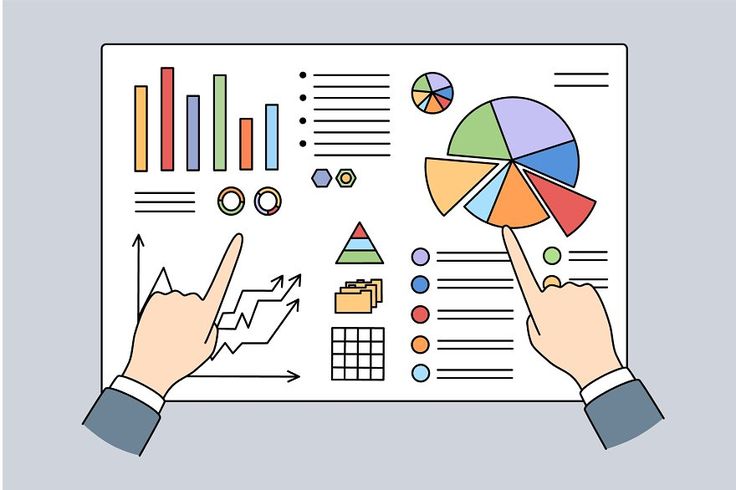
Descriptive statistics are those statistics that describe data in understandable figures, whereas inferential statistics are those statistics that are used to make predictions or to test ideas.
The professionals use both techniques to provide a full analysis. This assists clients in perceiving the present trends and prospects based on the reliable models and well-calculated data.
Predictive Modeling and Regression
Regression techniques demonstrate the relationship between variables, and predictive modeling indicates the future outcome. These methods are applied in business planning, decision-making in research, and strategic development by the analysts.
To conclude, they experiment with different models to seek the best fit, which will result ian n an accurate prediction in line with the real-world patterns.
Data Handling Survey Data Survey Data Interpretation.
Data about surveys needs to be cleansed, coded, and interpreted. Professionals minimise errors that are brought about due to biased responses or ambiguous questions.
They interpret data, contrast samples, and report findings in a systematic way. This assists the businesses, educators, and researchers in knowing the views and behaviors of people, or the market trends, very well.
Statistical services are used in industries.
Healthcare and Medical Research.
Accurate statistics are essential in treatment studies, patient outcomes, and clinical trials in healthcare. Medical information is assessed by professionals in order to be safe and effective.
Discoveries are supported by reliable analysis, which enhances diagnoses and assists researchers in demonstrating the worth of treatments or medical interventions.
Business, Marketing, and Finance.
Statistical services by companies are applied in market trends, customer behavior, pricing schemes, and risk management. Analysts assist businesses with the need to know performance, predict sales, and monitor financial stability.
Their knowledge enhances the marketing strategies, boosts profits, and minimizes the uncertainty of business due to well-founded decisions.
Higher Education and Social Sciences.
Educational and social scientists rely on the thorough analysis of data to comprehend the learning patterns, social behavior, or even community trends.
The professionals help in the processing of survey responses, comparison of groups, and the establishment of relationships. Their contribution makes research conclusions strong and makes students academically accurate.
State-of-the-Art Statistical Analysis Tools
Professional-Level Software.
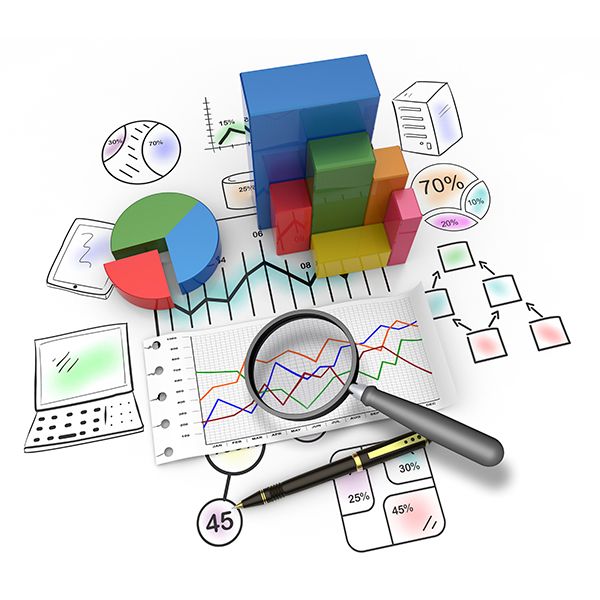
Complex data is processed using SPSS, R, SAS, Python, and Excel to be efficient with experts. Such programs promote complex modeling, fast computations, and precise visualizations.
The software of right software will provide stability, speed, and flexibility to all specific projects, big or small, and complicated.
Automation and The Visualization of Data.
Automation becomes manpower-intensive and accelerates the analysis. Results are shown in data visualization tools in the form of charts, graphs, and dashboards.
Such images simplify the comprehension of findings and reduce the presentation utility. Visual aids allow customers to take key lessons fast without strong analytical skills.
Machine Learning and Big Data Support.
There are large datasets that are encountered in modern projects. Machine learning techniques are also employed by professionals to identify more complicated patterns, categorize information, and offer better predictions.
These sophisticated tools assist organisations in remaining competitive, managing the growing volume of data at a rapid rate, and making decisions on the basis of automated, precise, and scalable techniques of analysis.
The problem of picking the right service provider.
Assessing Skills and Experience.
Find analysts who have high technical know-how and experience. Test their knowledge of statistical tools and industry.
Well-trained individuals are more precise in their findings and offer superior advice. Their credentials guarantee that your data is safeguarded throughout and through.
Reviewing and Past Projects Checking.
Past activities and reviews indicate the reliability of a service provider. Check case studies, feedback, and project results.
These facts give the best idea of their communication, timekeeping, and provision of insights. They have a history of successful projects, which gives them more trust and confidence.
Learning about Pricing and Timelines.
Pricing and schedules are clear and assist in planning for the clients. An excellent supplier shares costs freely and presents realistic deadlines.
Real analysts are always transparent in the project, and clients understand what to expect, as well as having confidence in the investment made in professional analysis.
Conclusions on Analysis of the Profession.
Why Expert Support Matters
Professional analysis holds that decisions can not be made using assumptions but using verified facts. Experts are people who simplify and use complex information.
They increase strength in planning and enhance strategies and minimize risks, which makes any project more confident and goal-driven.
Assuring Quality Data Results.
By having the right professionals, the clients obtain the correct results, reliable interpretations, and report clarity. The quality development fosters a sense of trust, fosters success, and enhances long-term planning.
Professional services are selected to make sure that each procedure of the analysis is managed accurately and clearly.
FAQs
1. Why not do it myself? Why not get a statistical analysis expert to do it?
Professionals will have the right results and minimize mistakes, as well as give understandable insights that will help them make better decisions.
2. Which tools are available to professional analysts?
They rely on such advanced software as SPSS, R, SAS, Python, and Excel.
3. Is it possible to work with big data with the help of professionals?
Specialists indeed apply machine learning and automation to analyze big data.
5. What makes a difference between a good and a bad service provider?
Check experience, skills, reviews, and previous project results to make sure that they deliver quality work.