Services About Psychometric Properties of the Scale Introduction
Learning Psychometrics
Psychometrics is the science of measuring mental ability, behaviour, and psychological qualities. It entails the development and testing of scales in order to measure traits, skills, or attitudes at the right level.
Psychometric assessment involves a standard procedure of determining the coherence and significance of results. The tools assist in making informed decisions, which are based on data by researchers, educators, and organizations.
Significance of Psychometric Measurement
Psychometric tests are useful in giving reliable information on the performance of an individual or a group. They assist in forecasting behavior, evaluating skills, and knowing personality traits.
Psychometric tools are used to control the development of students in the learning environment. They aid in the recruitment and training of the organization. In general, they facilitate wise decisions that minimise mistakes and enhance performance.
Major Psychometric Characteristics of a Scale
Reliability: Assuring Consistency
Reliability is the consistency of a scale in varying situations or over time. A reliable psychometric scale gives consistent results under the same conditions.
High reliability means that the assessment is reliable and minimises measurement errors that are brought about by variability. Any plausible psychometric tool must have this as a fundamental requirement.
Validity: Measuring What Matters
Validity represents the state of measuring what a scale states that it measures. A sound psychometric instrument is able to measure the intended construct, like intelligence, personality, or aptitude.
Validity is essential as improper measurements may give incorrect conclusions, ineffective interventions, and poor decisions in learning and organizational settings.
Scales Sensitivity and Specificity
Sensitivity is used to determine the capability of a scale to give true positives, and specificity is used to determine those giving true negatives.
High sensitivity means that important cases will be found,,d and high specificity means that there are no false positives. They both play a critical role in clinical assessment, psychological diagnosis, and employee assessment to guarantee accurate and functional outcomes.
Norms and Standardization
Norms are reference values based on a sample population to explain individual values. Standardization implies that all the assessments are carried out under the same conditions.
They can be used to make meaningful comparisons across individuals or groups, and hence, psychometric scales become useful in benchmarking, performance tracking, and research.
Services Concerning Psychometric Scale Development
Scale Design and Construction
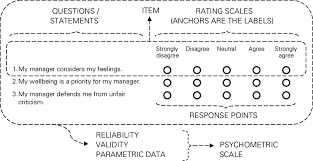
Psychometric services are based on scale design. Constructs are defined, items are developed, and the response formats are selected by experts. Clarity, relevance, and effectiveness will be ensured through proper design.
Scales that are well designed are simpler to comprehend by the respondents and also give correct measures, which are the initial stages to a reliable and valid scale.
Refinements and Analysis of Items
The item analysis helps in evaluating the performance of each question, and this can help to identify ambiguous, biased, or ineffective questions. Clarity, reliability, and validity are enhanced through refinement of items.
This measure will guarantee that the scale is able to measure the targeted constructs, and the quality of the assessment tool is improved. It is a very important step when developing professional psychometrics.
Pre-testing of the Pilots and Data-gathering
Pilot testing: This is done where a small group of people are given the scale to identify any problems before it is used on a large number. Data gathering at this level assists in assessing reliability, validity, and comprehension of the respondents.
This is a preliminary measure that helps in minimizing errors in the scale and maximizes assessment efficacy, because the scale checks out in the real world.
Psychometric data statistical analysis
Statistical analysis analyzes the pattern, uniformity, and precision in the data gathered. Scales are refined using techniques such as correlation, regression, and item response theory.
Effective statistical scrutiny guarantees that the psychometric instrument is scientifically fit, trustworthy, and prepared to be broadly utilized in research work or organizational undertakings.
Sophisticated Psychometric Appraisal Methods
Scale Validation Factor Analysis
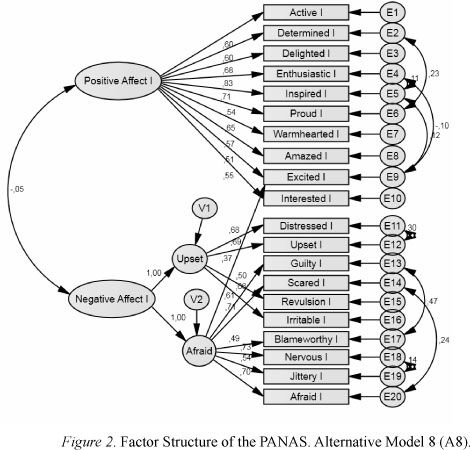
Factor analysis takes away the latent dimensions of a scale, and one is sure that items in a scale cover the desired constructs. It assists in the simplification of complex data and the structural validity.
This method is necessary in coming up with sound scales and in enhancing accuracy in the interpretation of the data, which is vital in both research and applied psychology.
Alternative Cronbach Alpha and Internal Consistency
Cronbach’s Alpha is a statistical value of internal consistency demonstrating how similar items are on a scale. Higher Alpha means high consistency and reliability.
This is a commonly applied measure during psychometric testing to establish the scale items as effective in collecting the target construct.
Test- Retest and Inter-Rater Reliability
The test-retest reliability is used to assess the stability of a scale through time, whereas inter-rater reliability assesses agreement by the various assessors.
The two techniques are significant to ensure that psychometric tests are the same, whether it is time or an assessment, to improve confidence in the test results and decision-making.
Use of Psychometric Scales
Educational Assessments
Psychometric scales are used in the education sector to determine cognitive skills, learning styles, and scholarly potential.
They assist teachers to know their strengths, weaknesses, and areas they need to improve Effectively implemented tests add value to teaching methods, student performance, and also inform individual learning programs for different groups of students.
Organizational and HR Evaluations
Psychometric equipment is extensively applied in recruitment, employee promotions, and team building. They measure character, problem-solving capability, and leadership ability.
Objective evaluations help organizations to achieve a high level of quality workforce as they eliminate bias. These scales are also useful in supporting employee growth and career planning programs.
Clinics and Psychological Studies
Psychometric scales assist clinical psychologists in diagnosing mental conditions and in monitoring treatment results. They give quantitative data on behavior, cognition, and emotion in research.
Quality psychometric measurements result in quality data, which provide effective intervention and further scientific research in psychology and psychiatry.
Professional Psychometric Services Advantages

Correctness and Consistency of Findings
Professional services guarantee the scientific reliability of psychometric tools. Best judgments are achieved through the correct assessment of individuals with the help of accurate judgment used in education, HR, and clinical activities.
Dependable results minimize errors, enhance predictions, and build confidence in the results of evaluations among individuals and organizations.
Customization to Special Requirements
Professional services are customized to meet special organizational or research needs. Scales may be modified to suit particular characteristics, competencies, or behaviors within a context.
This flexibility will make the assessment meaningful, practical, and easily applicable in decision-making and performance evaluation.
Echelon of Ethical and Standardized Practices
Ethical conducts make the psychometric tests respectful of confidentiality, fairness, and cultural sensitivity. Standardized processes ensure that there is consistency and comparability of outcomes.
Ethical guidelines are adhered to in professional services to safeguard the participants and uphold scientific integrity so that credible and responsible use of psychometric tools can be achieved.
Conclusion
Summary of Services
Psychometric services include scale design, item analysis, pilot testing, and sophisticated statistical tests. They offer effective, valid, and ethical assessment instruments in the process of education, organizations, and clinical practice.
Professional psychometric services give the right measurement of the instrument used to make accurate decisions and practical applications.
Trends in Psychometric Assessment in the Future.
The next generation of psychometrics involves AI analysis, adaptive testing, and online tests. These innovations will accelerate, simplify, and individualize evaluations.
The decision-making will also be improved by incorporating big data and predictive analytics, which will guarantee the further development of psychometric tools and their effectiveness in supporting human development.
FAQs
What are psychometric properties?
The quality of a scale or assessment tool is the indicator of such characteristics as reliability, validity, and consistency, which are defined as psychometric properties.
What is the relevance of reliability in psychometrics?
Reliability is an assurance that a scale will get the same results after some time, and thus, the assessment becomes reliable and correct.
What is the difference between reliability and validity?
Validity is used to determine if a scale is actually measuring what it is set out to measure, whereas reliability is used to determine whether the results are consistent.
Is it possible to make psychometric scales personalized?
Indeed, professional services have an option to customize scales according to education, human resources, or clinical research requirements.
What is the purpose he factor analysis in psychometrics?
Factor analysis serves to prove a scale through the establishment of underlying constructs and the guarantee that the items in the scale reflect the desired traits.